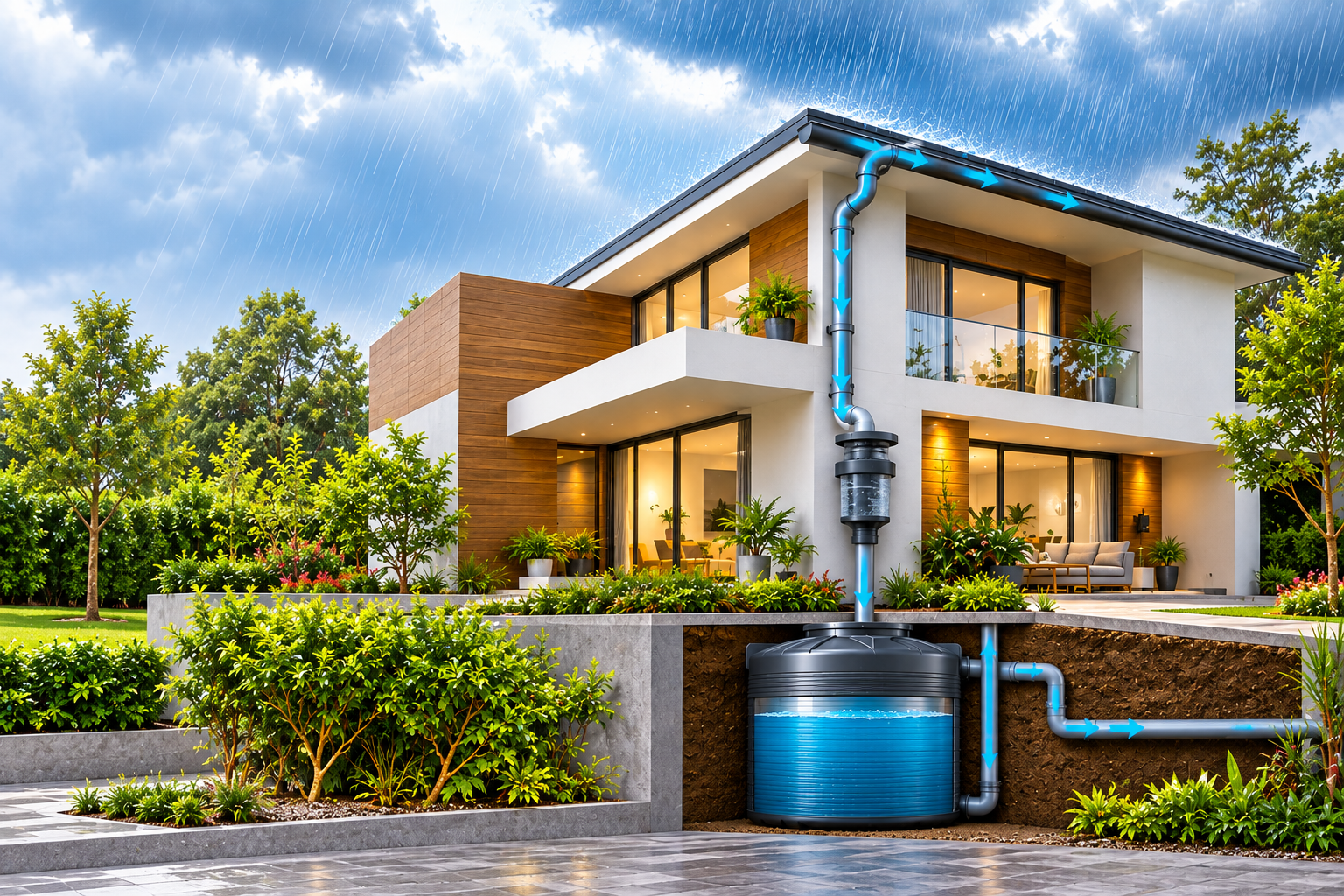
Modern home construction is increasingly focused on creating homes that are comfortable, durable, energy-efficient, and environmentally responsible. One practical way to support these goals is through rainwater harvesting. By collecting and managing rainwater effectively, homeowners can reduce dependence on conventional water sources while making better use of naturally available water. For homeowners planning sustainable home construction, integrating a rainwater harvesting system during the design and construction stage can provide long-term environmental and practical benefits. constructAhome focuses on incorporating efficient construction solutions that support responsible resource management and modern residential requirements.
Rainwater harvesting is the process of collecting rainwater from surfaces such as rooftops and directing it through a suitable drainage and filtration system for storage or groundwater recharge. The collected water can be used for suitable non-potable purposes depending on the treatment and system design. A typical rainwater harvesting system for homes may include rooftop collection areas, gutters, downpipes, filters, storage tanks, recharge pits, and other components. The design depends on the size of the property, rainfall patterns, soil conditions, available space, and intended use of the collected water.
How Does Rainwater Harvesting Improve Home Sustainability?
Sustainability in residential construction involves using resources responsibly while creating a home that remains functional and efficient over the long term. Rainwater harvesting for modern homes contributes to this approach by capturing rainfall that would otherwise flow into surface drainage systems. When rainwater is collected and managed properly, it can supplement the property's water requirements for applications such as gardening, landscape maintenance, cleaning, and other appropriate uses. This can help reduce the demand placed on conventional water sources. For homeowners interested in eco-friendly home construction, rainwater harvesting can therefore become an important part of an integrated water-management strategy.
Can Rainwater Harvesting Reduce Dependence on Municipal Water?
One of the major advantages of rainwater harvesting in residential buildings is that it provides an additional source of water. Depending on rainfall, roof area, storage capacity, and household consumption, harvested rainwater can supplement the property's water requirements. The amount of water that can be collected depends on several factors. A larger effective roof area can capture more rainfall, while local rainfall intensity and frequency determine how much water is available throughout the year. A properly designed system can therefore help homeowners manage water resources more efficiently rather than relying entirely on external sources.
How Does Rainwater Harvesting Support Groundwater Recharge?
Not every rainwater harvesting system needs to store water in a tank. Another approach is groundwater recharge, where collected rainwater is directed into appropriately designed recharge structures. Recharge pits, recharge trenches, and other suitable structures can allow water to infiltrate into the ground where soil and site conditions permit. This can help manage rainwater within the property and reduce uncontrolled runoff. The appropriate recharge method should be determined based on factors such as soil permeability, groundwater conditions, site layout, and local requirements.
What Are the Main Components of a Rainwater Harvesting System?
A residential rainwater harvesting system generally begins with a catchment area, commonly the rooftop. Gutters and downpipes then carry rainwater toward a filtration or first-flush arrangement before it reaches a storage tank or recharge structure. The exact configuration can vary according to the property's design and intended application.
| Component | Purpose |
|---|---|
| Rooftop Catchment | Collects rainwater from the roof surface |
| Gutters | Channels rainwater toward downpipes |
| Downpipes | Transfers collected water from the roof |
| First-Flush System | Diverts initial runoff containing accumulated roof contaminants |
| Filter | Helps remove suitable suspended particles |
| Storage Tank | Stores collected rainwater for appropriate uses |
| Recharge Pit | Directs suitable rainwater into the ground |
| Overflow System | Manages excess water when storage capacity is reached |
How Can Rainwater Harvesting Be Integrated During Home Construction?
Planning rainwater harvesting during home construction is often more practical than adding the complete system after construction. During the design stage, the location of tanks, drainage routes, recharge structures, gutters, and downpipes can be considered alongside the building layout. Architectural and structural planning can also account for the required space and access for inspection and maintenance. This helps create a more coordinated water-management system without unnecessarily modifying the completed building. At constructAhome, sustainable construction considerations can be incorporated into the planning process based on the property's requirements, site conditions, and project objectives.
Does Rainwater Harvesting Help Reduce Water Runoff?
During heavy rainfall, large quantities of water can flow from rooftops and paved surfaces into external drainage systems. Rainwater harvesting systems can capture a portion of this runoff and either store it or direct it toward suitable recharge structures. This approach can improve on-site rainwater management and make productive use of rainfall. However, the system should be appropriately sized and designed to handle overflow during intense rainfall events.
Can Rainwater Harvesting Reduce Water-Related Construction Concerns?
Water management is an important consideration in sustainable residential construction. Poorly managed rainwater can contribute to unwanted surface water accumulation, damp areas, soil erosion, and drainage problems around a property. A properly planned rainwater harvesting and drainage system can help direct rainfall through controlled pathways. It should work together with the property's overall drainage design rather than being treated as a standalone installation.
Why Is Rainwater Harvesting Important for Sustainable Home Construction?
A sustainable home is not only about using environmentally friendly materials. It also involves responsible management of resources throughout the property's life cycle. Rainwater harvesting for sustainable homes can contribute to water conservation, groundwater recharge, reduced runoff, and better utilization of rainfall. When combined with appropriate building orientation, energy-efficient design, natural ventilation, efficient plumbing, and responsible material selection, it can become part of a broader sustainable construction strategy.
How Much Rainwater Can a Home Collect?
The potential collection depends on the roof's effective catchment area, rainfall received, and system efficiency. A commonly used estimation approach is:
Potential Rainwater Collection = Roof Area × Rainfall × Runoff Coefficient
For example, a larger roof can collect more rainwater during the same rainfall event than a smaller roof. However, actual usable quantities depend on factors such as roof material, filtration, storage capacity, evaporation, system losses, and rainfall distribution. Therefore, a site-specific assessment is important before deciding the size of a home rainwater harvesting system.
What Should Homeowners Consider Before Installing Rainwater Harvesting?
Homeowners should consider the available roof area, local rainfall conditions, soil characteristics, groundwater conditions, storage requirements, intended water use, available space, drainage layout, and maintenance requirements. The system should also be designed to prevent contamination and provide appropriate separation between harvested rainwater and potable water supplies where required. Professional planning during the construction stage can help ensure that the system works effectively with the overall building design.
How Does constructAhome Approach Sustainable Home Construction?
constructAhome focuses on planning and constructing homes around the specific requirements of the homeowner and the site. Sustainable home construction can include practical measures such as rainwater harvesting, efficient water management, appropriate structural planning, and thoughtful use of construction materials. By considering these elements during the planning stage, homeowners can create a residence that is designed for long-term functionality, resource efficiency, and comfort.
Frequently Asked Questions
1. What is rainwater harvesting in home construction?
Rainwater harvesting is the process of collecting rainwater from rooftops or other suitable surfaces and storing it for appropriate uses or directing it toward groundwater recharge structures.
2. Is rainwater harvesting suitable for modern homes?
Yes. Rainwater harvesting for modern homes can be incorporated into both new residential construction and suitable existing properties, depending on available space, roof area, rainfall, and site conditions.
3. Can harvested rainwater be used for drinking?
Harvested rainwater requires appropriate treatment and quality monitoring before it can be considered for potable use. The treatment requirements depend on the source, collection system, storage conditions, and applicable local standards.
4. Does rainwater harvesting reduce water consumption?
It can supplement conventional water sources for suitable applications and may reduce the amount of externally supplied water required for those uses.
5. What is the best place to install a rainwater harvesting tank?
The appropriate location depends on the building layout, available space, structural considerations, drainage arrangement, accessibility, and intended capacity. The tank should be planned as part of the overall building design.
6. What is a recharge pit?
A rainwater recharge pit is a structure designed to allow suitable collected rainwater to infiltrate into the ground. Its effectiveness depends on soil conditions and proper design.
7. Can rainwater harvesting be added after house construction?
Yes, depending on the existing building and site conditions. However, integrating the system during the design and construction stage can make it easier to coordinate gutters, drainage, tanks, and recharge structures.
8. Does rainwater harvesting require regular maintenance?
Yes. Gutters, filters, first-flush arrangements, storage tanks, and other components should be inspected and maintained periodically to keep the system functioning properly.
9. How is the size of a rainwater harvesting system determined?
System sizing depends on factors such as roof area, local rainfall, runoff characteristics, storage requirements, intended water use, and site conditions. A site-specific assessment provides a more appropriate design.
10. Can constructAhome include rainwater harvesting in a new house project?
Rainwater harvesting can be considered as part of a sustainable home construction plan based on the property's requirements, site conditions, and overall project design.
Conclusion
Rainwater harvesting is a practical approach to improving water management in modern residential construction. By collecting rainfall from rooftops and directing it toward suitable storage or groundwater recharge systems, homeowners can make better use of naturally available water while reducing unnecessary runoff. For those planning sustainable home construction, integrating rainwater harvesting during the design stage can help create a more resource-conscious and efficiently planned home. With appropriate design, installation, and maintenance, a rainwater harvesting system for homes can become a valuable component of modern residential construction. constructAhome can help homeowners plan and build homes with practical construction solutions that consider structural requirements, functionality, water management, and long-term residential needs.